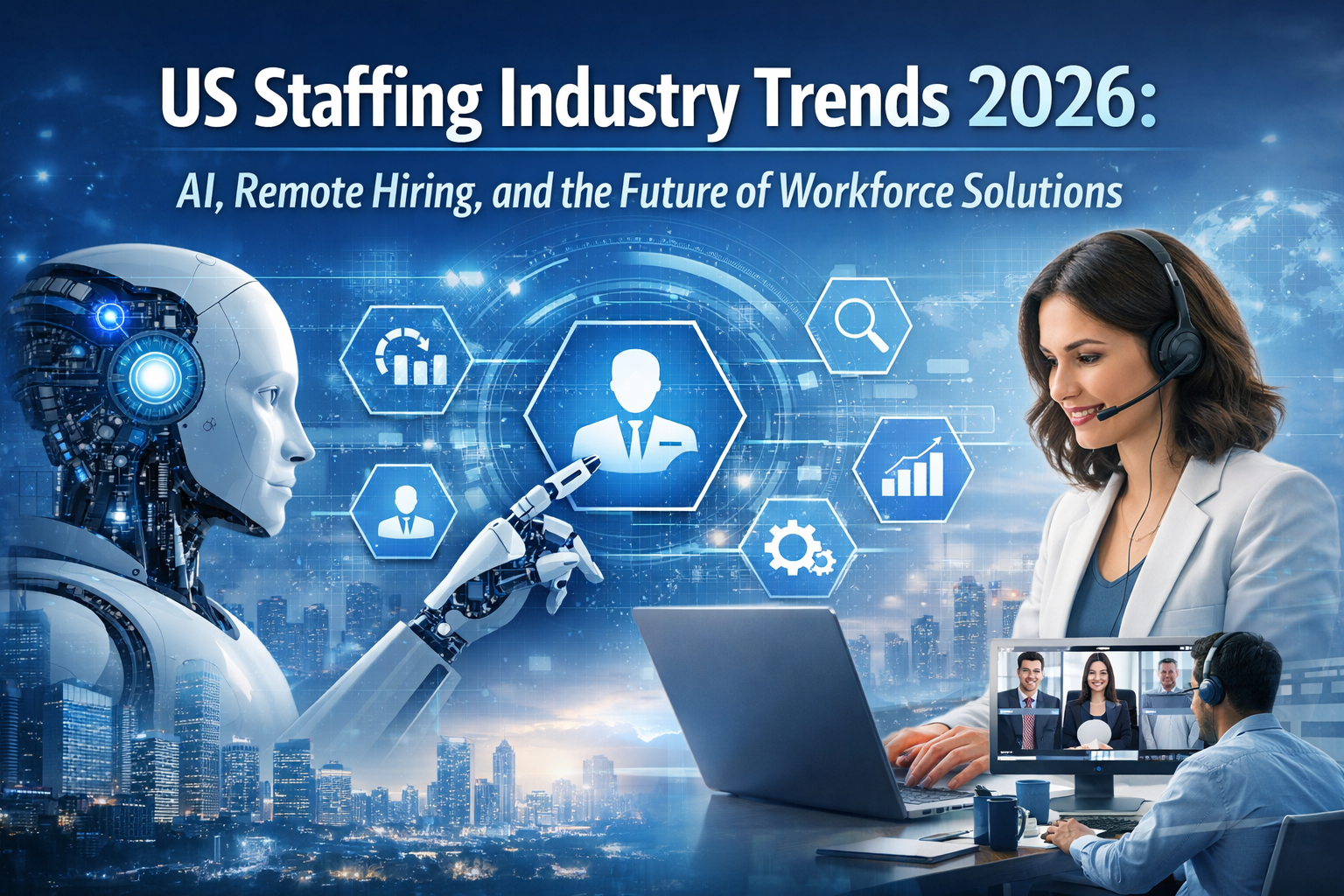
The US staffing industry is undergoing a massive transformation in 2026. Driven by technological innovation, changing workforce expectations, and evolving business needs, staffing firms are no longer just intermediaries—they are strategic talent partners.
From AI-driven recruitment to remote workforce expansion, companies are reshaping how they attract, hire, and retain talent. In this blog, we explore the latest US staffing industry trends, challenges, and opportunities shaping the future of hiring.
1. Rise of AI-Powered Recruitment
Artificial Intelligence is no longer optional—it's essential.
Staffing firms across the US are increasingly using AI to:
- Automate resume screening
- Match candidates with job roles
- Conduct initial interviews via chatbots
- Predict candidate success and retention
Why it matters: AI reduces hiring time by up to 70% and improves candidate quality. Recruiters can now focus more on relationship-building rather than manual tasks. Discover more about how AI in recruitment transforms talent acquisition and delivers meaningful business results.
Trend Insight: AI-powered tools are helping agencies scale faster while maintaining accuracy in hiring decisions.
2. Remote and Hybrid Workforce Expansion
Remote work is here to stay—even in 2026.
Companies are no longer restricted to hiring locally. Staffing agencies are tapping into:
- Global talent pools
- Remote contract workers
- Hybrid work models
Impact on Staffing:
- Increased demand for remote job placements
- Cross-border hiring opportunities
- Flexible staffing solutions
Key Statistic: Over 65% of US companies now offer hybrid or fully remote roles.
3. Demand for Specialized Talent
General hiring is declining. Specialized hiring is booming.
Industries driving demand:
- IT & Software Development
- Healthcare
- Finance & FinTech
- Engineering
- AI & Data Science
What this means: Staffing firms must niche down and build expertise in specific industries to stay competitive.
4. Growth of Contract and Gig Economy
The gig economy continues to disrupt traditional employment models.
Popular roles in gig staffing:
- Freelance developers
- Marketing consultants
- Healthcare professionals
- Project-based engineers
Benefits:
- Cost-effective hiring for companies
- Flexibility for workers
- Faster onboarding
Staffing firms are now acting as gig talent marketplaces rather than traditional recruiters.
5. Data-Driven Recruitment Strategies
Data is the new currency in staffing.
Recruiters are leveraging analytics to:
- Identify hiring trends
- Track candidate performance
- Optimize job postings
- Improve hiring ROI
Example Metrics:
- Time-to-fill
- Cost-per-hire
- Candidate engagement rates
- Offer acceptance ratio
Result: Better decision-making and improved hiring outcomes.
6. Employer Branding is Crucial
Candidates today are more selective than ever.
They evaluate:
- Company culture
- Work-life balance
- Career growth opportunities
- Online reputation
Staffing Agencies Role: Agencies now help clients build strong employer brands to attract top talent.
7. Automation in Staffing Operations
Automation is streamlining backend processes like:
- Candidate sourcing
- Interview scheduling
- Payroll management
- Compliance tracking
Tools Used:
- ATS (Applicant Tracking Systems)
- CRM platforms
- AI chatbots
Outcome: Reduced operational costs and faster hiring cycles.
8. Diversity, Equity, and Inclusion (DEI) Hiring
DEI is not just a trend—it's a priority.
Companies are actively seeking:
- Diverse talent pools
- Inclusive hiring practices
- Bias-free recruitment processes
Staffing Industry Shift: Agencies are implementing AI tools to eliminate unconscious bias and promote fairness. Learn more about how modern AI hiring solutions integrate DEI principles into recruitment workflows.
9. Increased Focus on Candidate Experience
Candidate experience is now a key differentiator.
What candidates expect:
- Quick responses
- Transparent communication
- Smooth application process
- Personalized engagement
Insight: A poor candidate experience can damage employer reputation and reduce hiring success rates.
10. Compliance and Regulatory Challenges
The US staffing industry faces strict labor laws and compliance requirements.
Key concerns:
- Worker classification (W2 vs 1099)
- Data privacy laws
- Wage regulations
Solution: Staffing firms are investing in compliance technology to avoid legal risks.
11. Upskilling and Reskilling Workforce
Skill gaps are increasing rapidly.
Staffing agencies are now:
- Offering training programs
- Partnering with learning platforms
- Preparing candidates for future roles
Why it matters: Companies prefer "ready-to-work" candidates with updated skills.
12. Digital Transformation of Staffing Firms
Traditional staffing firms are evolving into tech-enabled platforms.
Digital Trends:
- Cloud-based recruitment systems
- Mobile hiring apps
- Virtual onboarding
- Video interviews
Result: Faster, scalable, and more efficient recruitment processes.
13. Talent Shortage Continues
Despite economic fluctuations, talent shortage remains a major issue.
Most affected sectors:
- Healthcare
- Technology
- Skilled trades
Staffing Strategy:
- Passive candidate sourcing
- Talent pooling
- Long-term workforce planning
14. Rise of Recruitment Marketing
Recruitment is now marketing-driven.
Strategies include:
- Social media hiring campaigns
- SEO-optimized job postings
- Employer branding content
- Paid ads for talent acquisition
Impact: More visibility, better candidates, faster hiring.
15. Future Outlook of US Staffing Industry
The future of staffing is:
- AI-driven
- Candidate-centric
- Data-focused
- Flexible and remote-friendly
Predictions for 2026 and beyond:
- AI recruiters will become mainstream
- Remote hiring will dominate
- Skill-based hiring will replace degree-based hiring
- Staffing firms will evolve into talent ecosystems
Conclusion
The US staffing industry in 2026 is more dynamic and technology-driven than ever before. Agencies that embrace AI, focus on candidate experience, and adapt to changing workforce trends will thrive in this competitive landscape.
Whether you're a staffing firm, recruiter, or employer, staying ahead of these trends is essential for success. The future of hiring is here—and it's powered by AI, data, and a deep commitment to human-centered talent solutions.