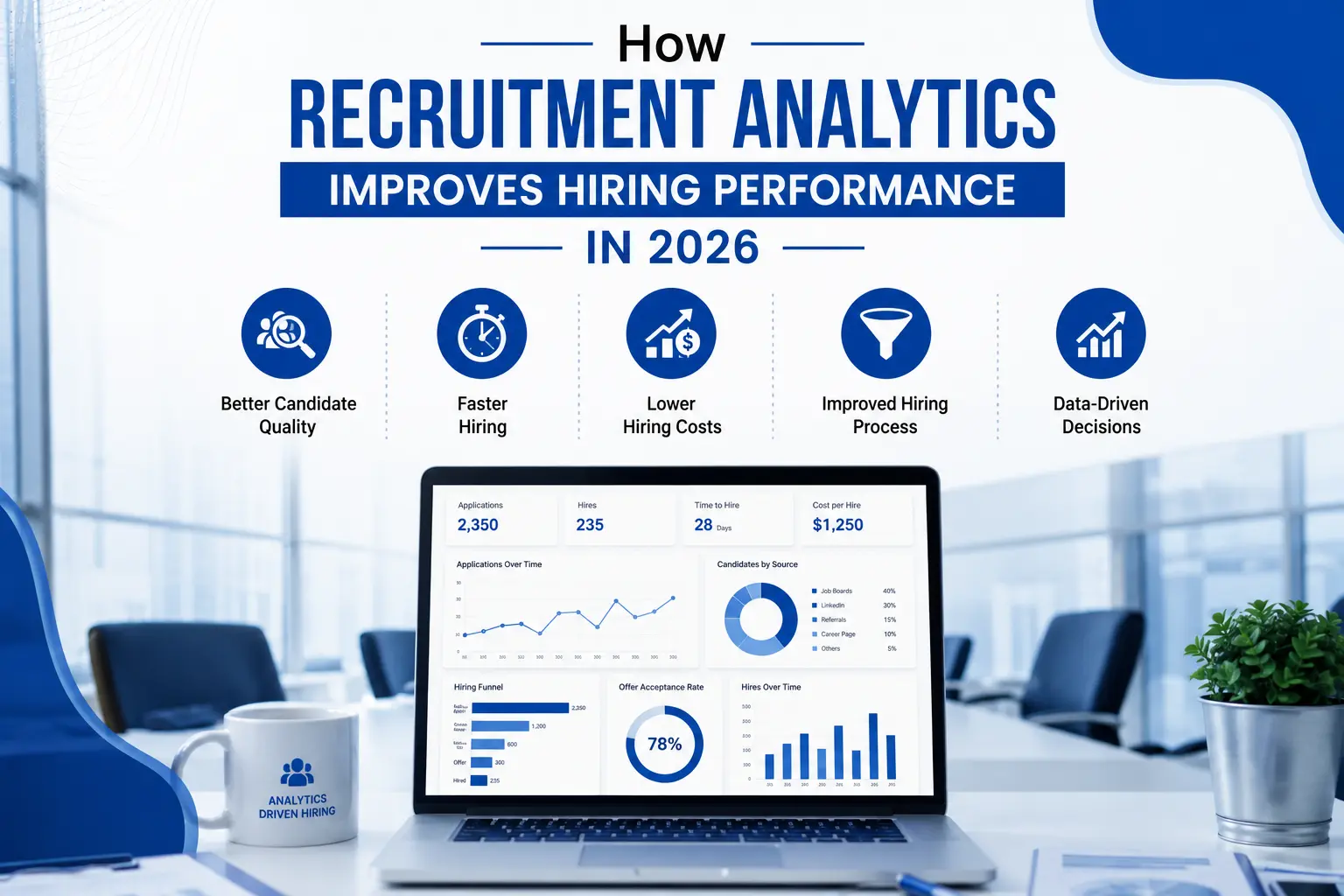
Hiring the right employees is one of the most important factors for business success. However, many companies still make recruitment decisions based on assumptions instead of real hiring data. This often leads to slow hiring processes, poor candidate selection, higher recruitment costs, and increased employee turnover.
This is where recruitment analytics plays a major role in modern hiring. Recruitment analytics helps businesses track, measure, and improve every stage of the hiring process using real-time data and AI-powered insights.
From tracking time-to-hire and candidate quality to measuring recruitment source performance, recruitment analytics tools help HR teams make smarter and faster hiring decisions.
Today, companies of all sizes are using recruitment analytics software and hiring dashboards to improve recruitment performance, reduce hiring delays, and optimize talent acquisition strategies.
In this guide, we will explain how recruitment analytics improves hiring performance, why it matters in 2026, and how AI-powered platforms like Easy Hire Tools help businesses streamline recruitment using advanced hiring analytics tools.
What is Recruitment Analytics?
Recruitment analytics is the process of collecting, analyzing, and using hiring data to improve recruitment performance and hiring decisions.
It involves tracking recruitment metrics such as:
- Time-to-hire
- Cost-per-hire
- Source of hire
- Candidate conversion rates
- Interview success rates
- Recruitment funnel performance
- Employee retention rates
- Hiring quality metrics
Recruitment analytics software converts hiring data into actionable insights that help recruiters identify weaknesses, optimize hiring strategies, and improve recruitment outcomes.
Instead of relying on guesswork, businesses can use recruitment data to make informed hiring decisions.
Why Recruitment Analytics is Important in Modern Hiring
The hiring industry has become highly competitive. Companies receive large numbers of applications while struggling to identify the right candidates quickly.
Without recruitment analytics, businesses often face problems such as:
- Slow hiring processes
- Poor hiring decisions
- High recruitment costs
- Inefficient recruitment channels
- Low-quality applicants
- High employee turnover
- Lack of hiring transparency
Recruitment analytics solves these issues by providing accurate hiring insights and measurable recruitment performance data.
Businesses can track which hiring strategies work best and eliminate ineffective recruitment methods.
This helps organizations improve efficiency, reduce costs, and hire better talent faster.
How Recruitment Analytics Improves Hiring Performance
Faster Hiring Decisions
One of the biggest advantages of recruitment analytics is faster hiring.
Many recruiters waste time manually analyzing recruitment data or reviewing hiring reports. Recruitment analytics dashboards automatically organize and display hiring metrics in real time.
This allows HR teams to quickly identify recruitment bottlenecks and speed up decision-making.
For example, analytics can reveal:
- Which hiring stages cause delays
- Which recruiters perform best
- Which job positions take longer to fill
- Which recruitment sources provide quality candidates
By identifying inefficiencies, businesses can optimize hiring workflows and reduce time-to-hire significantly.
Better Candidate Quality
Recruitment analytics helps companies hire higher-quality candidates.
Traditional hiring methods often focus only on resumes and interviews. However, analytics tools evaluate recruitment data more deeply by analyzing candidate performance, interview scores, assessment results, and employee retention data.
This helps businesses identify which candidates are more likely to succeed within the organization.
AI-powered recruitment analytics can also compare historical hiring data to predict candidate success rates.
As a result, businesses improve employee productivity and reduce bad hires.
Reduced Recruitment Costs
Hiring mistakes are expensive for businesses, especially small companies and startups.
Recruitment analytics helps reduce hiring costs by tracking recruitment spending and identifying cost-effective hiring channels.
For example, analytics can show whether candidates from:
- Job portals
- LinkedIn recruitment
- Employee referrals
- Career websites
- Social media hiring campaigns
are generating better hiring results.
Companies can then focus their recruitment budget on high-performing channels instead of wasting money on ineffective recruitment campaigns.
This improves recruitment ROI and lowers overall hiring expenses.
Improved Recruitment Funnel Performance
The recruitment funnel represents every stage of the hiring process, from job application to final hiring.
Recruitment analytics dashboards help businesses track recruitment funnel performance by analyzing:
- Application rates
- Screening success rates
- Interview conversion rates
- Offer acceptance rates
- Candidate drop-off rates
This helps recruiters identify where candidates are leaving the hiring process.
For example, if many candidates drop out after interviews, businesses may need to improve interview communication, salary expectations, or hiring speed.
Optimizing the recruitment funnel improves candidate experience and increases successful hires.
Key Recruitment Metrics Every Business Should Track
Time-to-Hire
Time-to-hire measures how long it takes to fill a job position.
A long hiring process can lead to productivity losses and candidate drop-offs.
Recruitment analytics tools help companies reduce time-to-hire by identifying delays in resume screening, interview scheduling, or approval workflows.
Faster hiring improves business efficiency and candidate satisfaction.
Cost-per-Hire
Cost-per-hire tracks total recruitment expenses for each employee hired.
This includes:
- Job advertising costs
- Recruitment software costs
- Recruiter salaries
- Interview expenses
- Agency fees
Tracking cost-per-hire helps businesses manage recruitment budgets more effectively.
Source of Hire
Source of hire measures where successful candidates come from.
Recruitment analytics identifies the best-performing recruitment channels so companies can invest more in high-converting hiring sources.
This improves recruitment efficiency and candidate quality.
Quality of Hire
Quality of hire measures employee performance and long-term success after recruitment.
This metric helps businesses understand whether their recruitment strategy is attracting the right talent.
High-quality hires improve productivity, employee retention, and business growth.
Offer Acceptance Rate
Offer acceptance rate tracks how many candidates accept job offers.
Low acceptance rates may indicate problems such as:
- Uncompetitive salaries
- Poor candidate experience
- Slow recruitment processes
- Weak employer branding
Analytics helps companies identify and solve these issues.
Role of AI in Recruitment Analytics
Artificial intelligence is transforming recruitment analytics in 2026.
AI-powered recruitment analytics tools can:
- Predict candidate success
- Automate hiring reports
- Analyze resume data instantly
- Identify hiring trends
- Detect recruitment bottlenecks
- Improve candidate matching
- Generate hiring forecasts
AI recruitment software reduces manual reporting work and provides more accurate hiring insights.
This helps recruiters make smarter and faster recruitment decisions.
Benefits of Recruitment Analytics for Small Businesses
Small businesses often operate with limited HR resources and smaller hiring budgets.
Recruitment analytics helps small companies compete with larger organizations by improving hiring efficiency.
Benefits include:
- Faster recruitment workflows
- Better hiring decisions
- Reduced hiring costs
- Improved candidate quality
- Increased recruiter productivity
- Smarter recruitment planning
- Better employee retention
With recruitment analytics dashboards, small businesses gain visibility into hiring performance without needing large HR teams.
Recruitment Analytics and Candidate Experience
Candidate experience has become an important part of recruitment success.
Slow communication, delayed interviews, and unorganized recruitment processes negatively impact employer branding.
Recruitment analytics helps improve candidate experience by tracking:
- Response times
- Interview scheduling efficiency
- Candidate feedback
- Communication delays
- Application completion rates
Improving candidate experience increases offer acceptance rates and helps businesses attract top talent.
Common Recruitment Challenges Solved by Analytics
Recruitment analytics helps businesses solve many hiring problems such as:
High Employee Turnover
Analytics identifies hiring patterns linked to employee retention problems.
This helps businesses improve candidate selection and reduce turnover.
Poor Hiring Decisions
Data-driven recruitment reduces guesswork and improves hiring accuracy.
Slow Recruitment Processes
Analytics identifies bottlenecks that delay hiring.
Businesses can then optimize workflows for faster recruitment.
Inefficient Recruitment Channels
Analytics shows which recruitment sources provide the best candidates and highest ROI.
Best Recruitment Analytics Tools for Hiring Teams
Modern recruitment analytics platforms offer multiple features designed to improve hiring performance.
Some important recruitment analytics tools include:
- Hiring Analytics Dashboard
- AI Resume Screening
- Candidate Comparison Tools
- Recruitment Funnel Tracking
- Skills Assessment Analytics
- Interview Performance Reports
- Recruitment ROI Tracking
Platforms like Easy Hire Tools provide AI-powered recruitment analytics solutions that help businesses streamline hiring processes and improve recruitment efficiency.
Future of Recruitment Analytics
Recruitment analytics will continue evolving as AI technology becomes more advanced.
Future recruitment analytics systems may include:
- Predictive hiring intelligence
- AI video interview analytics
- Automated recruitment forecasting
- Advanced workforce planning
- Real-time hiring performance tracking
- Employee success prediction models
Businesses using advanced recruitment analytics will gain a competitive advantage in talent acquisition and workforce management.
Conclusion
Recruitment analytics is transforming the hiring industry by helping businesses make smarter, faster, and more data-driven recruitment decisions.
From reducing hiring costs and improving candidate quality to optimizing recruitment funnels and enhancing candidate experience, recruitment analytics improves every stage of the hiring process.
In 2026, businesses that rely on AI-powered recruitment analytics tools will outperform companies using traditional hiring methods.
Platforms like Easy Hire Tools help organizations simplify recruitment with advanced analytics dashboards, AI resume screening, candidate comparison tools, and recruitment automation solutions.
By using recruitment analytics effectively, businesses can improve hiring performance, reduce recruitment challenges, and build stronger teams for long-term success.