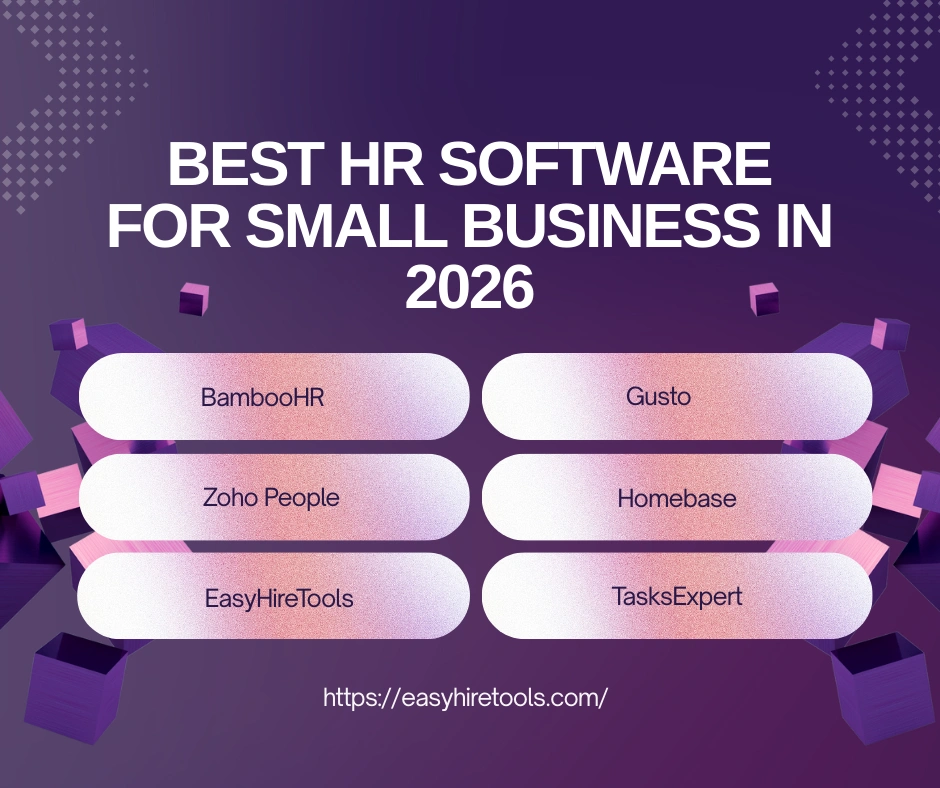
Finding the right HR software for small business is one of the smartest moves a company can make in 2026. With teams growing and regulations becoming more complex, small business owners and HR leaders must adopt modern HR systems that automate routine tasks, provide insights, and help build strong cultures—without breaking the bank.
What Is HR Software for Small Business?
A human resource management system for small business—often referred to as HR software or HRMS—is a digital platform that helps businesses automate and manage key HR functions. These functions may include:
- Employee data management
- Recruitment and onboarding
- Payroll and benefits administration
- Time and attendance tracking
- Performance reviews
- Compliance and reporting
These tools replace spreadsheets and manual processes, freeing up time to focus on strategic priorities like culture, leadership, and growth.
Why Small Businesses Need HR Tools Today
Small businesses often start with manual HR processes—spreadsheets for employee details, email chains for leave requests, and paper files for compliance. While this might work for a handful of employees, it quickly becomes inefficient as teams grow. Here's why adopting HR platforms for small businesses is essential:
- Efficiency: Automates time-consuming tasks such as payroll, onboarding, and attendance tracking
- Compliance: Reduces risk with labour law compliance, reporting, and audit trails
- Employee Experience: Modern small business employee management system features like self-service portals boost morale
- Scalability: Systems grow with you—from 5 to 50 to 500 employees
In short, HR systems let you focus on strategic work like talent development rather than administrative chores.
Key Features of Modern HR Management Systems for Small Business
When evaluating platforms, look for these crucial features:
- Employee Information Management
- Payroll & Benefits Administration
- Time & Attendance Tracking
- Recruitment & Onboarding Systems for Small Business
- Performance Management Tools
- Mobile & Remote Access
- Compliance & Reporting Dashboards
These capabilities help you build organised processes that prevent headaches and fuel growth.
Top HR Software for Small Business in 2026
🥇 BambooHR — Best All-Around HRMS
BambooHR consistently ranks as one of the best HR tools for small business because of its intuitive design and comprehensive feature set. From employee data management to onboarding workflows and performance reviews, it covers all core HR needs. Its user-friendly interface is perfect for small teams without dedicated HR tech support.
- Best for: Growing small to medium businesses
- Strengths: Centralised HR database, performance tools
- Limitations: Payroll add-ons may increase cost
🧾 Gusto — Best Payroll + HR
Gusto combines payroll, benefits, and basic HR automation into a single platform—a major advantage for small businesses needing both HRMS and payroll in one place. Its payroll features are very strong, covering tax filing and compliance efficiently.
- Best for: Small businesses with payroll needs
- Strengths: Strong payroll automation, tax compliance
📊 Zoho People — Best Budget-Friendly HRMS
Zoho People is a cost-effective online HR system for small business that still delivers robust HR functionality. It's ideal for teams that want solid HR features without enterprise pricing.
- Best for: Small businesses on a budget
- Strengths: Affordable plans, customizable features
👥 Homebase — Best for Hourly Workforces
For businesses like cafes, retail stores, or hospitality services with hourly employees, Homebase offers excellent scheduling, time tracking, and basic HR features. It also includes a free HR system for small business plan that works well for very small teams.
- Best for: Hourly and shift-based teams
- Strengths: Easy scheduling, time-clock tools
🤖 Easy Hire Tool — Free HR Recruiting & Candidate Avatar Creator
Easy Hire Tool offers smart, AI-powered tools that help HR teams craft precise candidate profiles and refine hiring workflows—especially helpful for recruitment and hiring planning in small companies. The candidate avatar tool lets you define the ideal hire by entering job titles, skills, and attributes, producing structured candidate profiles instantly. All features are 100% free, with no sign-ups or hidden fees required.
- Best for: Small businesses needing smart HR recruiting support
- Strengths: Free, intuitive, perfect for startup hiring
Free HR Systems for Small Business
Not all small businesses can invest heavily upfront in HR software. Thankfully, there are reliable free HR system for small business options:
- Homebase — Includes free schedule and time-tracking features
- Open-source HRMS options — (e.g., OrangeHRM & other community tools)
- Easy Hire Tool — Completely free candidate screening and recruitment support
Free tools are often limited in advanced features but are perfect for early-stage or micro-teams.
How to Choose the Right HR Software For Small Business
Choosing the best human resource management system for small business requires a clear understanding of your needs:
1. Identify HR Priorities
Do you need payroll first? Hiring support? Time tracking? Choose a platform based on your most urgent HR challenges.
2. Evaluate Budget & Plans
Compare subscription tiers and pricing, including add-ons for payroll or compliance if needed.
3. Check Integration Support
Good HR software should integrate with payroll, accounting software, calendars, and productivity apps your team already uses.
4. Consider Growth
Select systems that scale so your HR tech doesn't become obsolete as you expand. Choosing wisely now will save time and costs in the long term.
Best HR Solutions for Small Business: Use Cases
| Business Type | Best HR Solution |
|---|---|
| Startup (1–10 employees) | Easy Hire Tool + Free HR tools |
| Small office (10–50 employees) | BambooHR or Zoho People |
| Service teams (hourly) | Homebase (free tier) |
| Teams with payroll needs | Gusto |
Each business type has unique needs—and the best HR solutions align with those priorities.
Top Benefits of Modern HR Platforms
- Centralised HR data and easier reporting
- Streamlined hiring and onboarding workflows
- Improved compliance with labour laws
- Automated payroll & benefits management
- Better employee experience and retention
The best systems turn HR from a cost centre into a strategic advantage.
Conclusion
Finding the right HR software for small business in 2026 is about matching your needs with the right tool. Whether you're prioritising recruitment with talent acquisition tools, managing payroll, or automating employee data, there's a solution that fits your budget and growth stage. Start with your most critical HR challenge, and build from there.
Frequently Asked Questions
What is the best HR software for small business?
There's no single "best," but platforms like BambooHR, Gusto, and Zoho People are top choices depending on your specific needs.
Are there cost-effective HR systems for small businesses?
Yes—many platforms offer free plans or affordable tiers, and tools like Easy Hire Tool help with recruiting at no cost.
Can small businesses use HR platforms without dedicated HR staff?
Absolutely—many tools are designed for non-HR professionals and include intuitive interfaces.
What features should a small business HR system include?
Key features are onboarding systems, payroll integration, time tracking, employee data, and performance tools.
How do I know if my small business is ready for HR software?
If you're managing HR with spreadsheets, struggling with compliance, or experiencing growth, it's time to invest in HR software.
Key Features to Look For
- Core HR Functionality: Employee records, personal information management
- Payroll Integration: Automated payroll processing
- Recruitment Tools: Job posting and candidate management
- Performance Management: Goal tracking and reviews
- Compliance Features: Stay updated with labor law requirements
- Employee Self-Service: Employees can manage their information
- Reporting & Analytics: Insights into HR metrics
Popular HR Software Options for Small Business
Several platforms offer excellent solutions for small businesses with different needs and budgets:
- Scalable Solutions: Software that grows with your business
- User-Friendly Interfaces: Easy for non-technical staff to use
- Affordable Pricing: Competitive rates for small teams
- Strong Support: Responsive customer service
Making the Right Choice
When selecting HR software for your small business, consider:
- Your current number of employees and growth projections
- Budget constraints and ROI expectations
- Integration with existing tools
- Cloud-based vs. on-premise solutions
- Vendor reputation and customer reviews
Conclusion
Investing in the right HR software can significantly improve your small business's efficiency and employee satisfaction. Take time to evaluate your needs and choose a solution that aligns with your company's goals and budget.